
Martinsburg Address Sources by Era
A reliable search for Martinsburg past residents starts by matching the source to the date. Current parcel data gives the best bridge into a deed chain. Directories and census pages fill in people who did not hold title, while maps and newspapers help when an address changed. No source is a complete household roll.
| Source | Years It Covers | Where Held | What It Shows |
|---|---|---|---|
| County deed index and deeds | Index 1772-1926 and deeds 1772-1901 on microfilm; deeds 1945-present online | Berkeley County Clerk, WV Archives, online index | Parties, dates, legal descriptions, and title links |
| Polk city directories | Verified years from 1913-14 through 1960, with gaps | FamilySearch, library, and directory reels | Names, street numbers, work, and household clues |
| WV Archives directories | Selected years from 1915-16 through 2012-16 | West Virginia Archives | Later address snapshots and resident entries |
| Federal census | Public through 1950 under the 72-year rule | NARA and library databases | Household members, ties, ages, and location context |
| Sanborn maps | 1885, 1891, 1897, 1902, 1907, 1913, 1922, 1931 | WVU digital collection and Library of Congress | Footprint, use, materials, and number context |
| Newspapers and obituaries | Regional library microfilm from 1791-present | Campbell Beall Room and archives | Moves, sales, deaths, notices, and family links |
For a modern address, begin with the parcel and deed. For an early-twentieth-century household, compare a directory year with the nearest public census. Older questions often need the Clerk's counter, archive microfilm, maps, and newspapers in combination.
Start With the Martinsburg Parcel
The current parcel is the anchor for anyone asking who lived here before. Use the West Virginia Real Estate Assessment search to capture the owner name, mailing address, situs address, parcel ID, legal description, and any transfer history shown. A situs address is the place of the property. The mailing address is where tax mail goes, and those two fields may differ.
Keep the full parcel ID and legal wording exactly as displayed. Street text can change, but lot, block, subdivision, map, and parcel clues can persist. Assessment data is evidence of ownership and tax status, not a full list of Martinsburg past residents. It is the clean handoff to the recorded deed.
The official assessment interface shows the county and parcel controls used at this first stage.
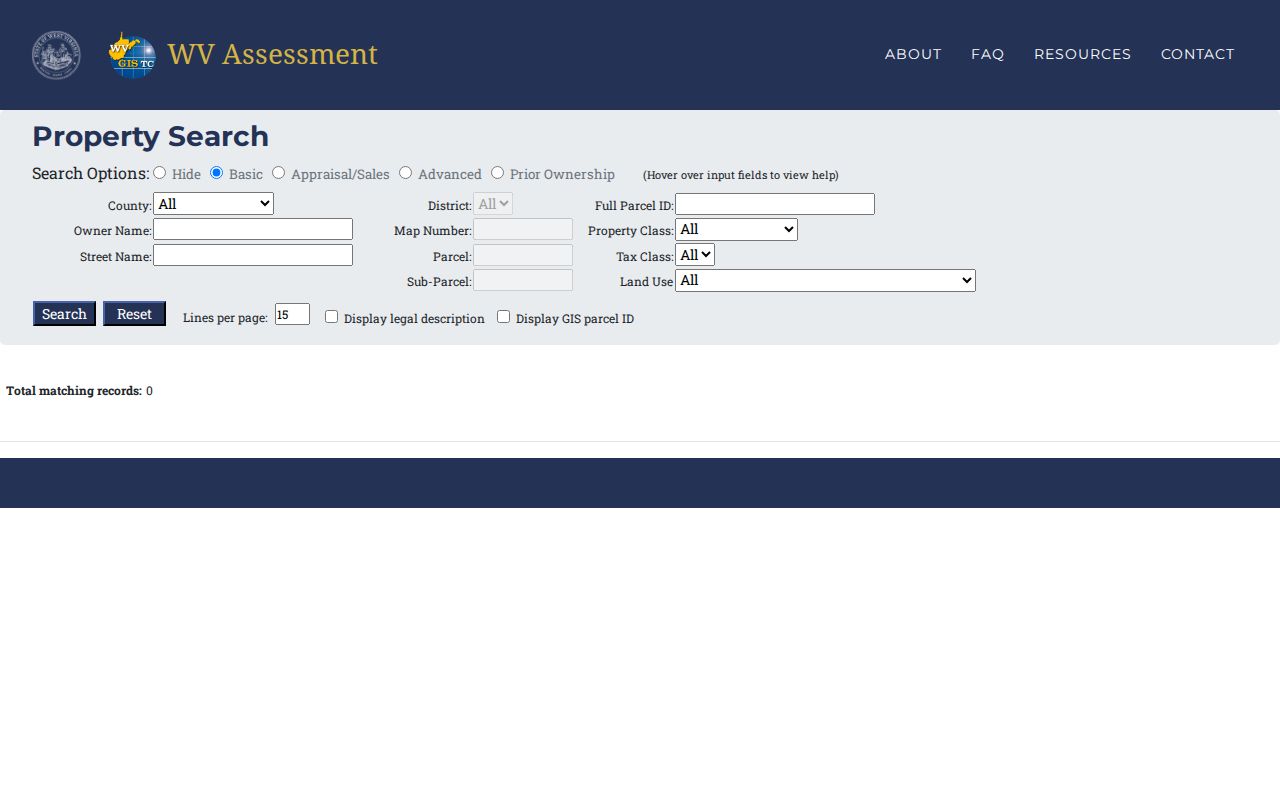
Save the parcel result and its date before moving backward, since assessment and GIS records may update on different schedules.
Martinsburg Deeds Online and Offline
The Berkeley County Electronic Record Search lists deeds from 1945, deeds of trust from 1918, liens and judgments from 1998, and releases from 1992. Online or virtual access is available through a regular-use account. The county lists a $15 monthly fee, plus image charges of $1.50 for the first two pages and $1 for each later page. Call the Clerk for the current copy procedure if an account is not the right route.
The live index is broad, but it is not every Berkeley County deed. Older deed indexes covering 1772-1926 and deed volumes covering 1772-1901 survive on West Virginia Archives microfilm. Counter books and back-scanned records also matter. A blank online result means only that no match was found in the range and fields checked.
Coverage check. Record the category, date range, spelling, result count, and whether the search reached an image, an index entry, or only a counter lead.
Walk Berkeley's Deed Chain Backward
The Berkeley Real Estate Look Up indexes people and entities as grantors and grantees. A grantor gives or transfers an interest; a grantee receives it. The chain of title is the linked series of recorded transfers for the same property. A legal description identifies the land through lot, block, subdivision, bearings, or other recorded terms, and it is often more durable than a street number.
- Copy the current owner, parcel ID, and legal description from the assessor record.
- Find that owner as grantee in the Berkeley deed index, then confirm the parcel clues in the purchase deed.
- Record the seller, date, instrument number, book, page, and exact property wording.
- Search that seller as grantee to locate the prior acquisition. Repeat the same proof check at each transfer.
- When the chain passes the online range, ask for the old real-property books, Clerk counter index, or State Archives reel.
- Grantor and grantee
- The party transferring an interest and the party receiving it.
- Chain of title
- The linked record of transfers affecting one parcel.
- Legal description
- The recorded land description used to distinguish the parcel when street wording changes.
The portal also offers subdivision, lot, block, section, map, phase, unit, book-page, and instrument fields. Those controls help separate two people with the same name. A deed proves a recorded interest or transfer; it does not, by itself, prove occupancy.
The Berkeley Real Estate Look Up displays the grantor, grantee, category, and date paths used in this chain.
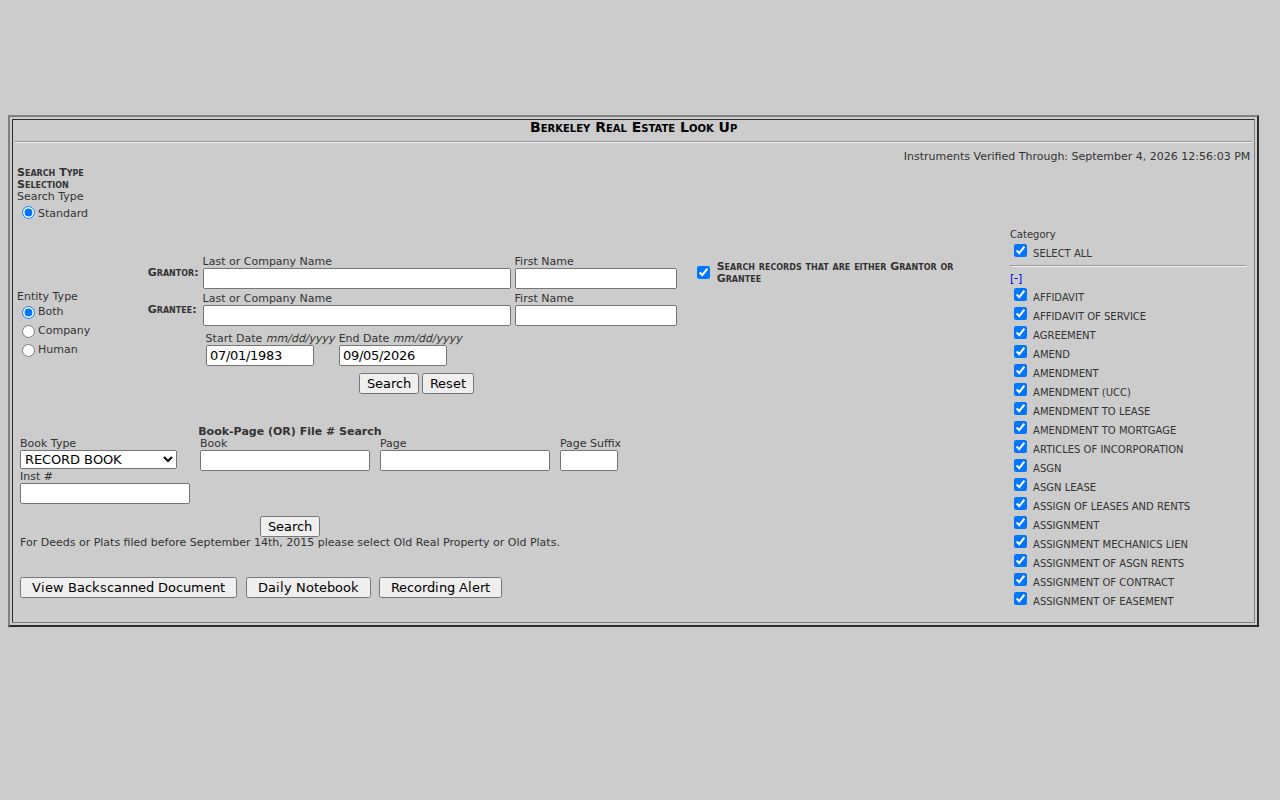
Use the result detail and document image to compare legal descriptions, rather than joining names on surname alone.
Translate Old Martinsburg Addresses
Address continuity is a common break in a Martinsburg previous residents search. Ordinance 97-17, passed September 11, 1997, adopted a uniform numbering system, made the Berkeley County Road Name Index the official street list, and placed number assignment with the 911 Director. It confirms a modern addressing milestone, but no complete earlier citywide renumbering table was found.
Preserve the old spelling and number before making a modern form. Then test directionals, nearby numbers, corner landmarks, old road names, Sanborn geometry, and the deed's legal description. Treat any match as an inference until a plat, deed, GIS record, or custodian confirms it. This keeps a renamed road from falsely ending the trail.
Note: A postal Martinsburg label does not establish city limits, parcel identity, or a past household at that site.
Map Martinsburg Houses Across Time
Sanborn fire-insurance maps show buildings, not ownership. The WVU digitized Martinsburg collection covers 1885, 1891, 1897, 1902, 1907, 1913, 1922, and 1931. Sheets can show a structure's footprint, building material, use, block relation, and sometimes a house number. This is useful when a directory address seems to land between today's parcels.
Compare the closest map year with a city directory, then align alleys, corners, churches, shops, and lot lines with GIS. A change in footprint may date an addition or replacement. It cannot identify all former occupants. The free Library of Congress 1891 set has 12 sheets and offers a second source for an early Martinsburg block.
The WVU map viewer provides the dated sheets used for that building check.
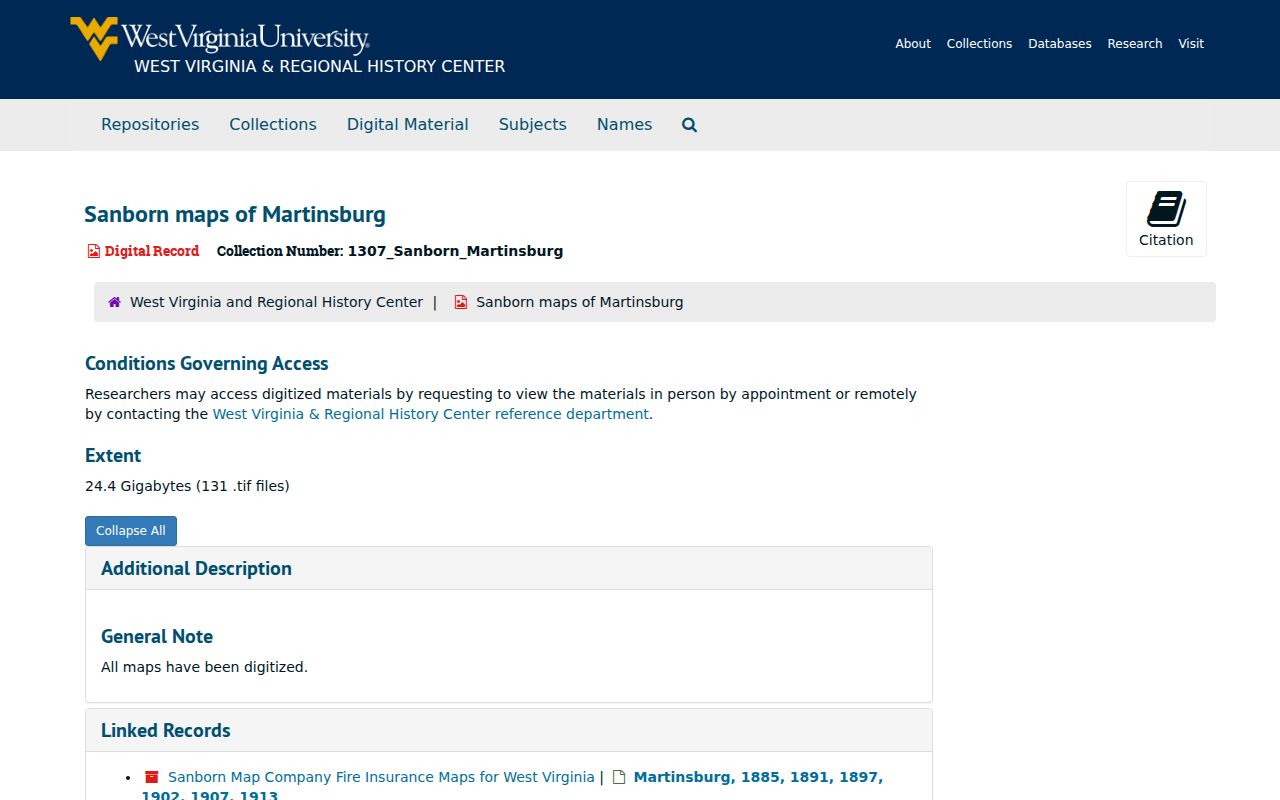
Record the year and sheet with each observation so a later map change is not mistaken for a resident change.
Martinsburg House History Appointments
The Campbell Beall Room at 101 W. King Street brings together old city directories, deed and land indexes, census and tax sources, obituary indexes, family files, and newspaper microfilm. Access is by appointment. Staff offer limited guidance but do not conduct full research, so arrive with a narrow date range and exact address variants.
The library's local-history page shows the appointment-based collection route for Martinsburg past residents.
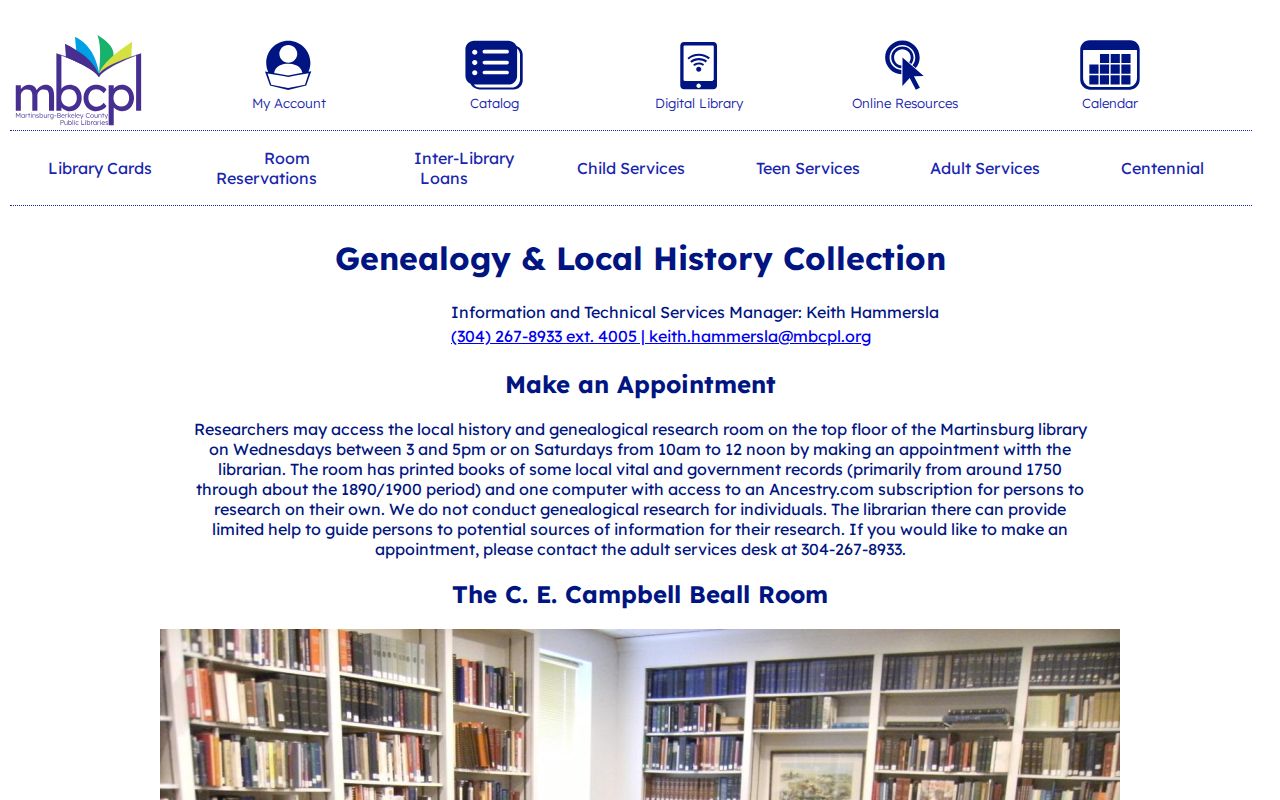
Its collection list helps decide whether a directory, newspaper reel, obituary index, or deed source should be requested first.
Historic Berkeley's Archives and Research Center at 136 E. Race Street holds family, architectural, map, photo, and microfiche collections. It is also appointment-based. Published research terms are $30 per hour, with a two-hour minimum for on-site or staff research. Take the parcel ID, deed book and page, names, dates, and sources already checked. Ask for one likely file group first.
The Historic Berkeley research description identifies the archive and paid appointment channel.
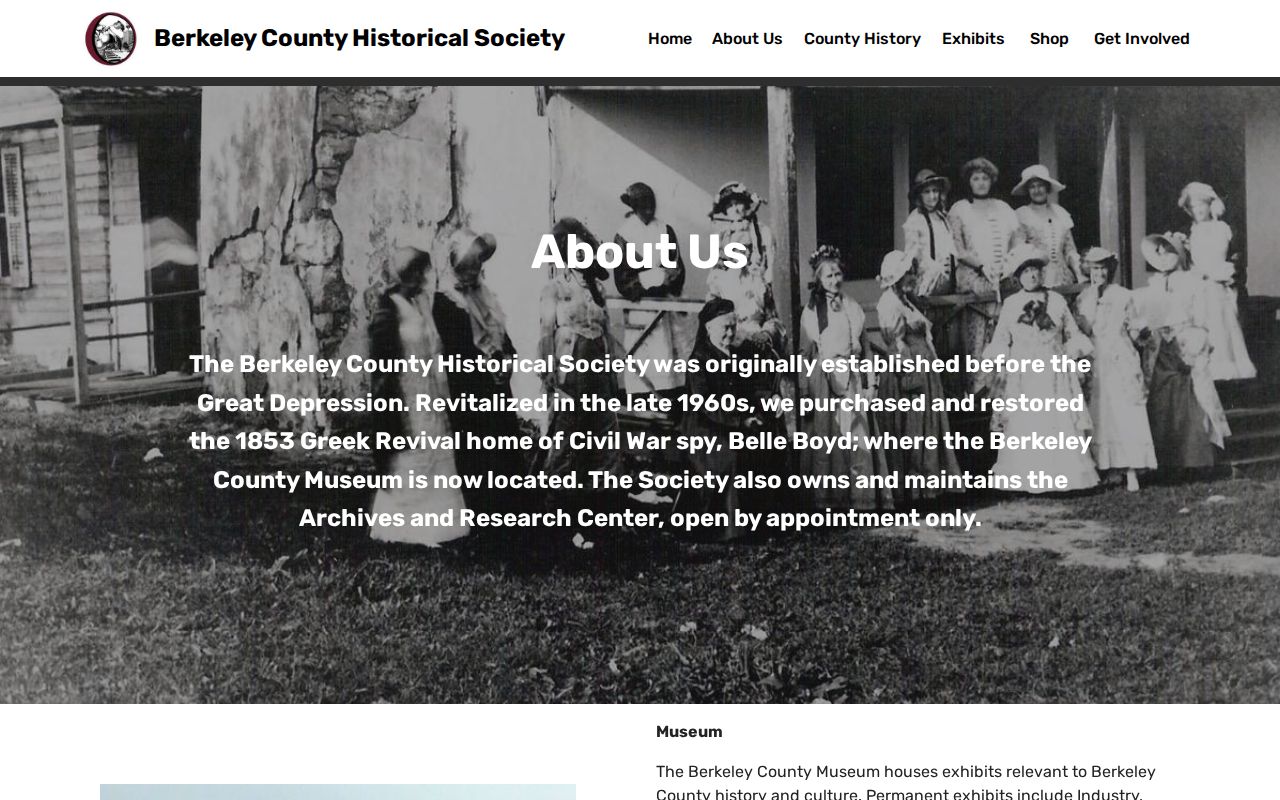
Use the public description to prepare a small request before committing time to an archive appointment.
These collections can explain a former shop, church, boarding place, street alias, or building phase. Their notes remain clues until the dated record is tied to the same parcel.
Rebuild Martinsburg Past Households
Owners are only part of the story. A Martinsburg city directory may name a spouse, work, business, widow, boarder, or street number. The released federal census can show household ties and age context. Neither should be read as a live roster. Detailed collection years and publisher runs are organized on the Martinsburg city directories page.
- Transcribe the address exactly from the deed or dated directory, including its directional and suffix.
- Check the street-number section and the alphabetical name section in the closest directory year.
- Compare the nearest released census year through 1950, using the enumeration district and nearby households to test the block.
- Check the next directory on each side of the census to bracket a move-in or move-out period.
- Confirm the same site through a deed description, Sanborn sheet, newspaper notice, obituary, or probate file.
An enumeration district is the area assigned to a census taker. It helps place a household when the sheet lacks a clear modern number. A criss-cross directory is arranged by street or phone rather than just surname, which makes it useful for asking who lived here before.
Obituaries and Berkeley fiduciary files can close the trail. An obituary may name a last residence, relatives, or funeral home. Probate may identify a decedent, fiduciary, heirs, and a transfer context. A named heir does not prove that the heir occupied the Martinsburg property.
Lawful use. Research Martinsburg previous residents for house history, family history, or civic study. Never use personal details to track, threaten, or harass a living person.
When Martinsburg Records Go Missing
Berkeley County's 1922 courthouse fire caused significant damage. Modern online start dates create another kind of gap. Neither fact proves that a deed, case, or household never existed. It means the next search should move to an older index, microfilm reel, newspaper, directory, or later instrument that cites the missing record.
Label each substitute accurately. An original book, certified copy, microfilm image, index entry, abstract, and historical account carry different weight. Keep a negative-result log with the URL or office, date checked, fields and variants tried, coverage limit, result count, and next route. That habit is especially useful for Martinsburg previous residents whose names cross the online and microfilm eras.
Note: Write “not located in the inspected index” instead of claiming that a missing person or instrument never existed.